

Qatar denies Israeli election interference as coalition uncertainty deepens
Doha rejected allegations of meddling as Israeli opposition leaders challenged Netanyahu’s claims and analysts warned of potential regional risks.
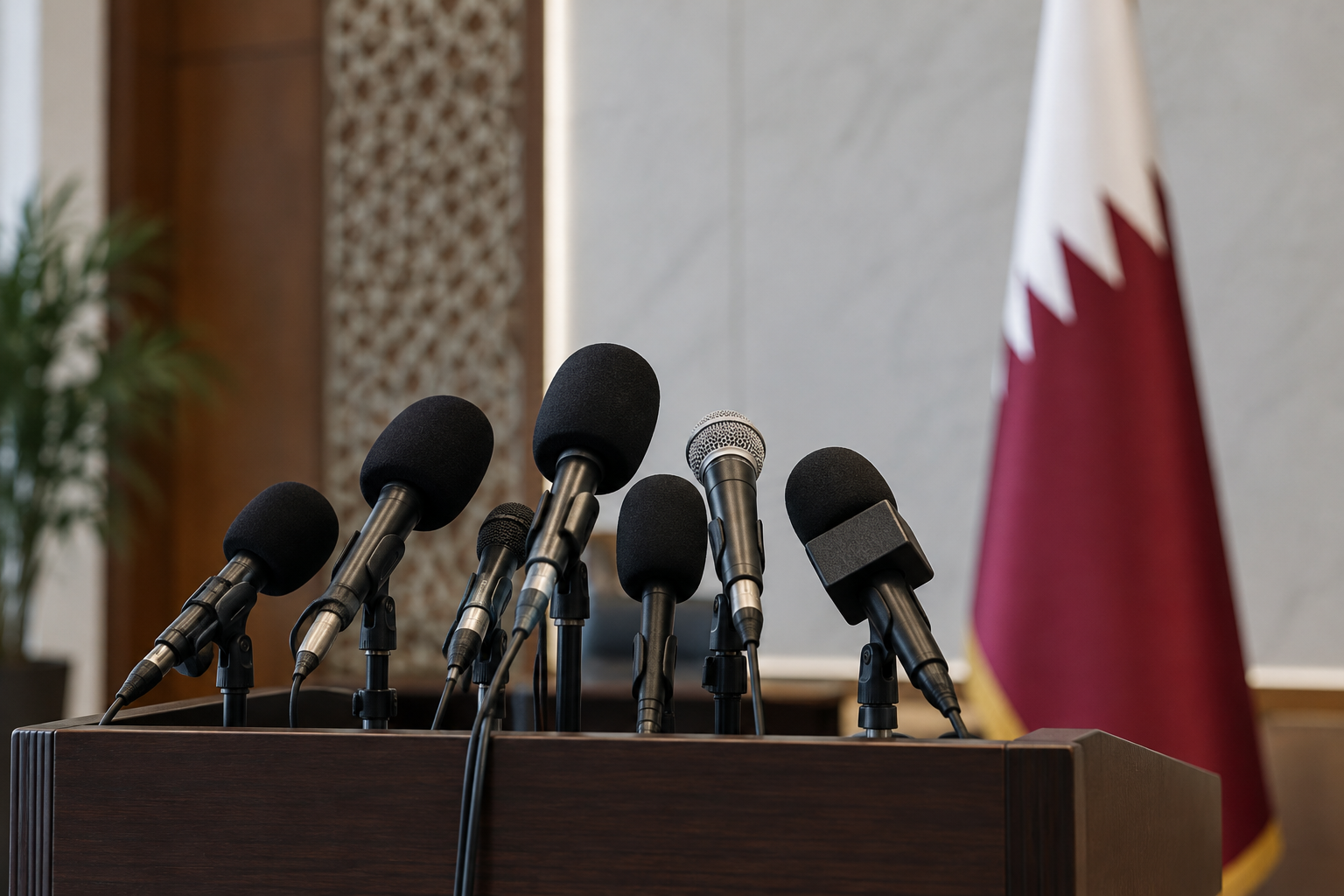
DOHA | 30-10-2026 : Qatar rejected allegations that it interfered in Israel’s election on Thursday, as Benjamin Netanyahu’s claims about foreign-backed activity by parties representing Palestinian citizens drew criticism from Israeli officials and opposition leaders, according to The Guardian and The National.
The diplomatic dispute unfolded while the parliamentary outcome remained unsettled. The National reported that almost 95 per cent of votes had been counted, with counting of double-envelope ballots continuing. A governing majority requires 61 seats in the 120-member Knesset.
Doha rejects allegations
Qatari foreign ministry spokesman Majed al-Ansari denied that his country had intervened in the election or financed efforts to influence its outcome, The Guardian reported. In a statement on X, he criticised accusations from Israeli politicians and their media contacts, describing them as both absurd and dangerous.
According to The Guardian, al-Ansari said Qatar had faced successive allegations of buying influence over Netanyahu, Israel’s political left and, most recently, Arab voters. His response came amid challenges to the legitimacy of voting in Palestinian communities in Israel.
The Guardian reported that Netanyahu and his allies had urged the internal security service, Shin Bet, to investigate alleged vote buying and other irregularities that they claimed involved foreign funding. The newspaper described Likud’s assertion that Arab parties had stolen the election as unsupported by evidence.
Both The Guardian and The National reported that Israeli police had dismissed claims that parties representing Palestinian citizens had stolen the vote. The Guardian also reported that election committee members and other officials had rejected Netanyahu’s allegations.
Opposition challenges Netanyahu
Gadi Eisenkot, who leads the main opposition bloc, accused Netanyahu and Likud of pursuing an organised effort to discredit the results, according to The Guardian. President Isaac Herzog also warned against casting suspicion on an entire community.
Joint List leader Yousef Jabareen accused Netanyahu of incitement and of refusing to accept the political choices of Arab voters, The Guardian reported. Ahmad Tibi, another Joint List leader, argued that the campaign was intended to discourage Eisenkot from forming a government dependent on outside support from the Joint List or Ra’am.
The supplied reports differ in their characterisation of Netanyahu’s electoral position. The Guardian said his coalition had lost its parliamentary majority. A separate National analysis described an election victory and said he had won the most seats, but also called the election inconclusive. The National’s live coverage likewise reported no clear winner. The accounts therefore do not establish that Netanyahu had secured a governing majority.
Analysts warn of regional risks
Separately, analysts interviewed by The National raised the possibility of renewed Israeli military action against Iran, potentially alongside the United States after the US midterm elections. Those comments were forecasts, not confirmation of a decision to launch an operation.
Jerusalem-based geopolitical analyst Calev Ben-Dor considered an attack possible after the midterms, while former British military intelligence officer Lynette Nusbacher questioned its strategic justification. According to The National, she argued that air strikes alone were unlikely to bring down Iran’s government because its state structures were designed to withstand such attacks.
The National also reported questions about whether a caretaker Israeli government could authorise an attack and whether the military would support one. Analysts stressed the need for achievable objectives and prior consultation with Gulf states, whose infrastructure could face Iranian retaliation.
Sources: The Guardian; The National.

Correspondent
The MAUK Briefing
A concise daily digest of verified reporting, analysis and perspective. No noise.
Comments (0)
No comments yet. Start the conversation.